How to clean up old downloads automatically on Mac
Anything untouched for 30 days moves to an Old subfolder
Beginner · About 1 minute
In this guide
What this does
The Downloads folder tends to accumulate everything you’ve ever grabbed off the internet, most of which you needed once and never again. This rule doesn’t delete anything, it simply moves anything that’s been sitting there for 30 days without being touched into an Old subfolder, keeping the main Downloads view down to what you’re actually using right now.
What you’ll build
A rule that matches anything added more than 30 days ago, then moves it into an Old subfolder.
Open the rule editor
This walkthrough happens inside FilesAutomator itself, so install it from the Mac App Store first if you have not already, then open it. In its toolbar, choose Add, then New Automation Rule.
Name the rule and choose a folder
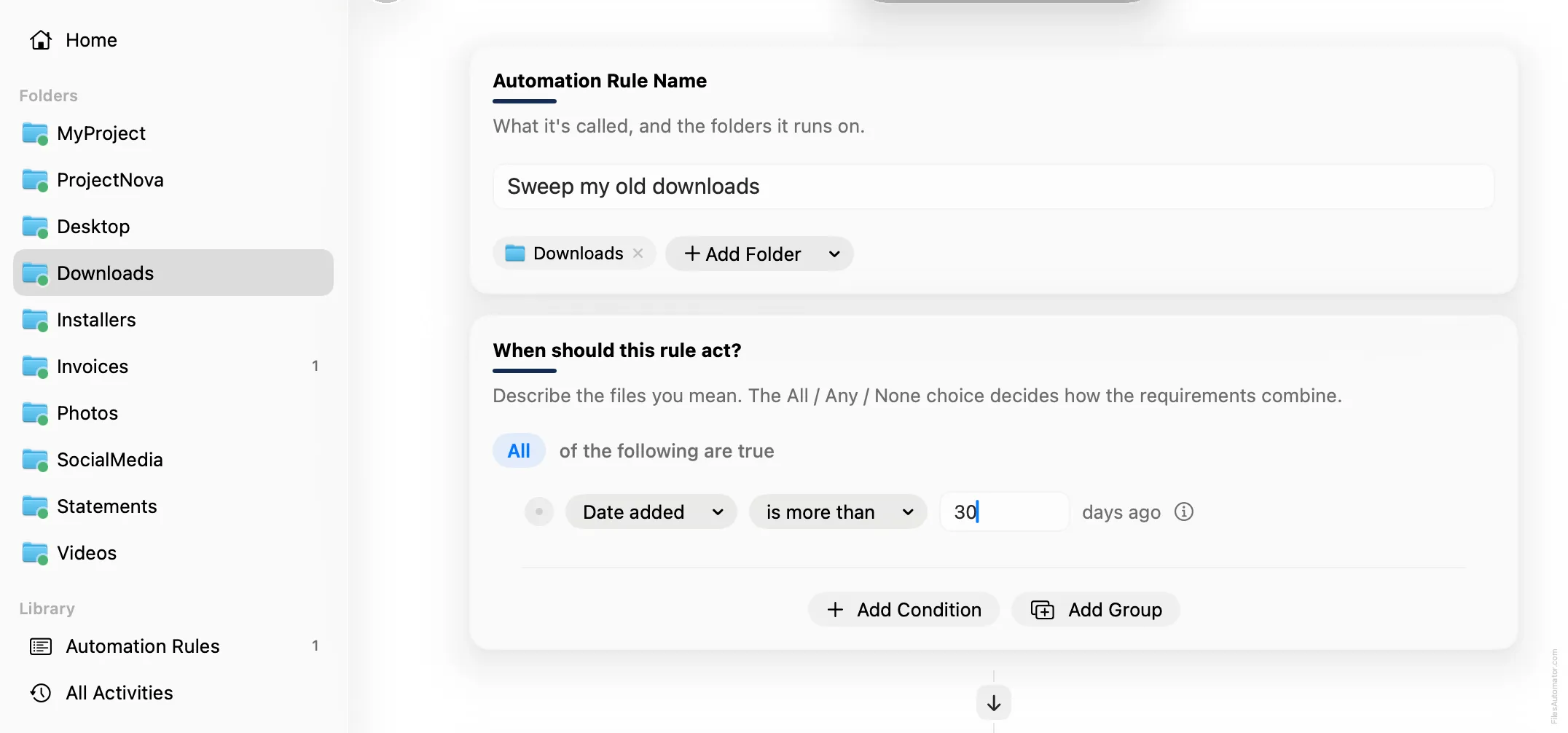
Name it something like “Sweep my old downloads” and use Add Folder to choose your Downloads folder.
Build the condition
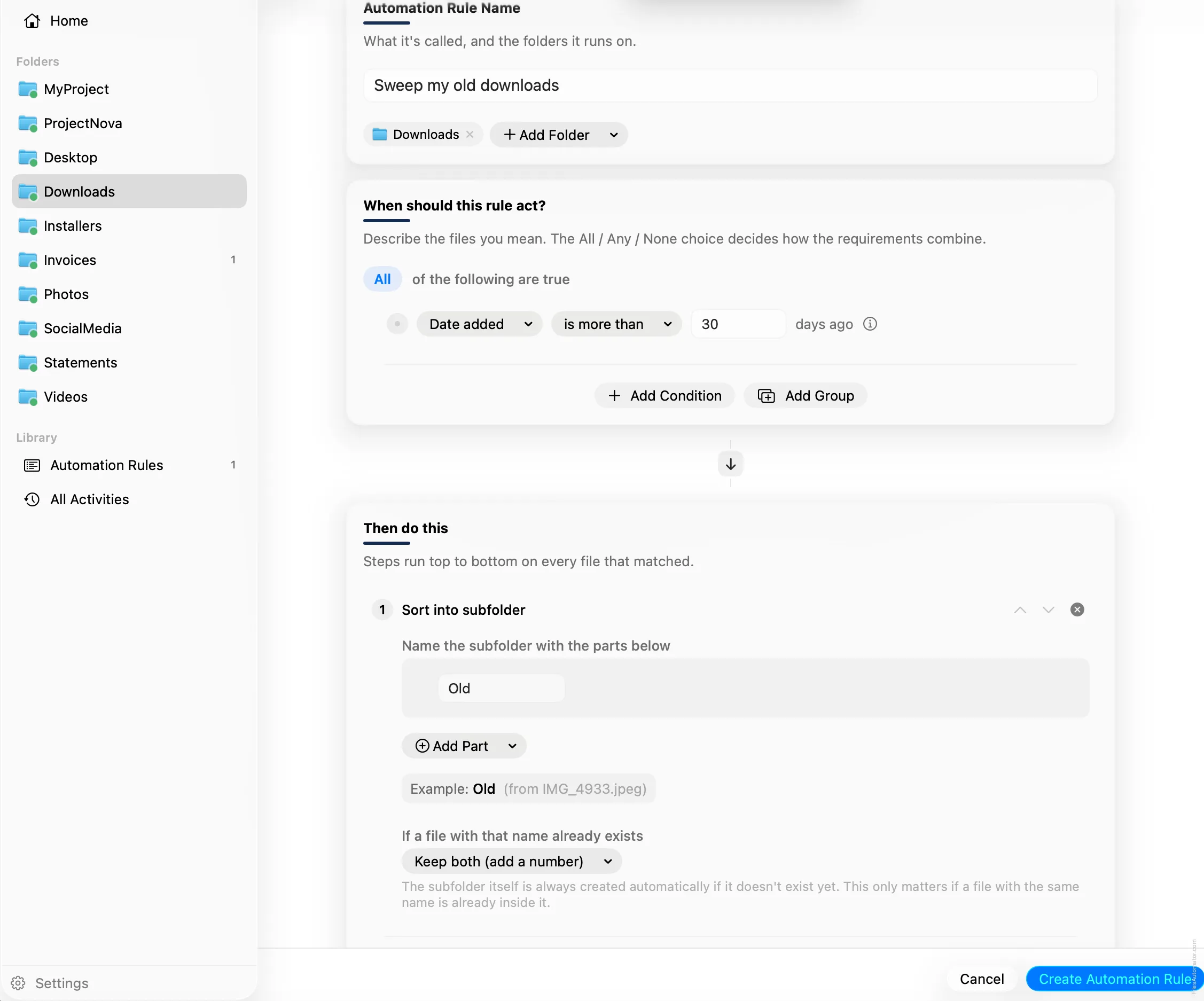
Add a single condition: Date added is more than 30 days ago.
Add the action steps
Step 1: Sort into subfolder
Choose Add Step, then Sort into folder. In “Name the subfolder with the parts below”, use Add Part, choose Text, and type Old.
Turn it on
Select Create Automation Rule, then switch the rule on. From now on, anything left untouched in Downloads for a month quietly moves itself out of the way.
A faster way
The template gallery inside FilesAutomator already has this rule ready to install, named Sweep old downloads.
Related rules
Get FilesAutomator
Everything in this guide happens inside FilesAutomator itself. Download it free from the Mac App Store to follow along, or to install this exact rule from the template gallery in one click instead of building it by hand.
Download on the App Store